Butcher's Ranch: Homestead
- 4.3
- Rating
- 10.00M
- Installs
- Free
- Price

 Analysis by App-foxy
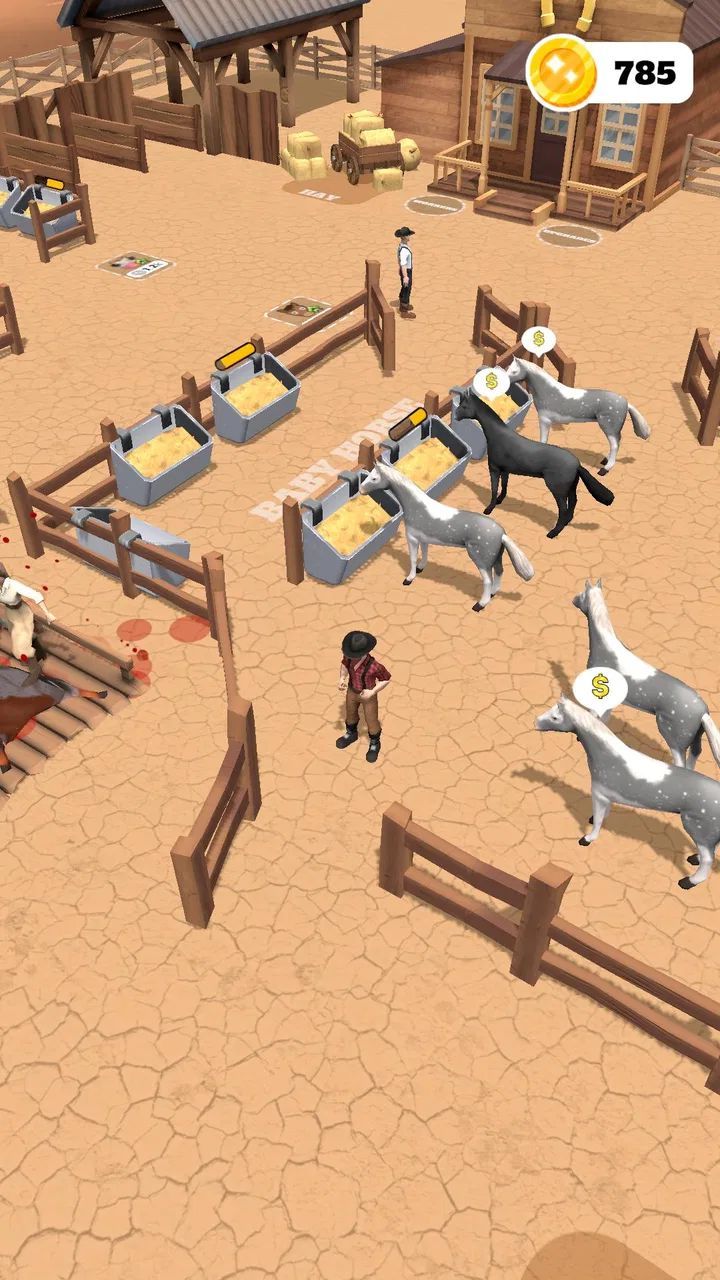
Butcher's Ranch: Homestead is an arcade game with a ranch-management idea at its center, and I found its appeal easiest to understand when I stopped treating it like a traditional action game. The satisfying part is not simply tapping through a short challenge; it is learning how to turn a small amount of work into a more productive ranch. The setting gives the game a distinctive personality, while the quick arcade structure keeps it approachable for short sessions.
It is developed by Homa and available as a free download for Android. The game is rated Everyone 10+, runs on devices using Android 7.1 or later, and has reached over ten million installs. Its average score sits at 4.3 from roughly ninety-five thousand ratings, which matches my impression that it is easy to pick up even though its resource decisions become more important after the opening moments.
What to expect from the ranch
The store short description calls it Butcher's Ranch, but the experience is broader than that label might suggest. I approached it as a compact ranch simulator with arcade pacing: collect what the ranch needs, make practical choices, and use the results to keep progress moving. It does not ask me to learn a complicated management spreadsheet before I can enjoy it. Instead, the early game communicates through action, repetition, and visible improvements.
You May Also Like

 Blood Strike: 2.5 Anniversary
Blood Strike’s Loadouts Turn Every Drop Into a Tactical Gamble
A close look at Blood Strike’s custom loadouts: how fast access to signature weapons reshapes its battle royale rhythm, rewards preparation, and narrows the gap between fights.

 Pandora - Music & Podcasts
Pandora’s Music Is Easy to Start, but Harder to Recover
Pandora’s strength is its low-effort path from a seed to a station. Its weak spot is how much confidence it asks you to place in connection, setup, and quiet recovery.

 8 Ball Pool
 Is Built on Rivalries, Rematches, and Routine
A close look at the rivalries, rematches, shared routines, and unanswered safety questions that turn a quick pool match into a persistent mobile community.

 Samsung Music
’s Quiet Strength Is Playing What You Already Own
Its reach comes less from spectacle than from dependable access to a personal library. That simplicity is both the app’s strongest retention engine and its ceiling.

 AccuWeather: Weather Radar
AccuWeather Review: A Quick, Clear Forecast for Everyday Decisions
For everyday plans, the best forecast is the one you can understand quickly. AccuWeather makes rain timing, radar, and local conditions easy to act on, with a few trade-offs.

 Hill Climb Racing
Why Hill Climb Racing Still Turns Crashes Into One More Run
A tiny car, a bumpy hill and one more upgrade: Hill Climb Racing keeps resurfacing because its simple chaos makes every near-miss feel personal.
More From Our News Desk



That makes the game a good fit for someone who wants a farming or ranching theme without committing to a long, slow simulation. I can play for a few minutes, complete a useful task, and leave with a clear sense of what I accomplished. At the same time, it is not the best choice if I am looking for a deep economy, extensive character relationships, or a large open world. The focus is on a streamlined loop rather than a detailed life simulator.
The main thing I would tell a first-time player is to watch the relationship between work and resources. It is tempting to tap every available action immediately, but the better habit is to ask what the next useful improvement requires. A resource that looks unimportant at the start can become the piece that prevents a smooth upgrade later. Progress feels better when I plan one step ahead instead of spending everything as soon as it appears.
The arcade category also explains why the game feels more direct than many familiar farming alternatives. A conventional farming game may spend more time on decorating, schedules, exploration, or social systems. Here, the ranch itself is the reason to keep playing. I am usually deciding how to make the next cycle more efficient, not wandering around looking for a dozen unrelated activities.
Who will enjoy this style
I would recommend it to players who like visible progress, simple management choices, and a theme that is a little rougher around the edges than a cheerful garden. It works particularly well for someone who wants a low-pressure game to open during a break, while waiting for transport, or after finishing a more demanding game. The controls are easier to understand when I treat each session as a small work shift rather than expecting a long story chapter.
It may be less suitable for players who dislike repeated resource gathering. The loop depends on doing related tasks again and again, and the enjoyment comes from making those tasks more productive over time. If repetition feels like busywork to you, the ranch theme alone may not be enough to hold your attention. Players who prefer competitive arcade scores may also find the management layer more important than the reflex challenge.
Getting through the first setup
On the first launch, I suggest giving the opening instructions your full attention instead of tapping through them quickly. The early guidance is doing more than explaining controls; it is teaching the order in which the ranch expects me to think. I found it useful to finish the first available action, check what it unlocked or produced, and only then decide where to spend the next resource.
The safest opening routine is simple. I look for the action that creates immediate progress, complete it, and inspect the ranch before starting another activity. This prevents a common beginner mistake: working toward an attractive improvement without noticing that a smaller prerequisite is needed first. The interface is easier to read when I pause after each meaningful change rather than treating every tap as part of one uninterrupted chain.
Because the game is free, it is easy to install and try without making a commitment. There are in-app purchases ranging from $2.99 to $49.99 per item, so I recommend deciding early whether I want to play strictly within the free route. I personally prefer to treat purchases as optional acceleration rather than part of the basic tutorial. That mindset keeps the first session focused on understanding the ranch instead of comparing every obstacle with a paid shortcut.
The current version is 1.43, and the Android requirement of 7.1 or later means it is accessible on a wide range of older compatible devices. That does not automatically guarantee identical performance on every phone, but it does make the game easier to consider if I am not using a recent flagship. I would still close unnecessary apps before playing on an older device, especially if the phone already struggles with other games.
Finding the first meaningful success
For me, the first real success is not merely completing the opening instruction. It is finishing a short chain in which one action supplies what the next action needs, leaving the ranch in a visibly better position. That moment shows the game’s central rhythm: work produces resources, resources support improvement, and improvement makes the next round feel less awkward.
To reach that point efficiently, I avoid spending early materials on anything that does not help the immediate progression path. I first identify the next improvement or task the game is pointing toward, then gather only what supports it. This is a small distinction, but it changes the opening from random tapping into a manageable plan. Once the first chain is complete, I have a much clearer idea of which actions deserve priority.
A useful habit is to separate necessary actions from available actions. The ranch may present several things I can do, but not all of them have equal value at that moment. I use the necessary action to move forward, then return to optional work when the next requirement is clear. This approach reduces wasted time and makes the game feel calmer, particularly during the first few sessions when every resource seems valuable.
Another practical tip is to check the result of an upgrade before immediately starting another one. I want to know whether it improves the speed of a task, increases what I can handle, or simply opens a new direction. Understanding that difference helps me choose the next activity intelligently. Even without a complex strategy guide, the player can learn a lot by comparing the ranch before and after each improvement.
Where new players can get confused
The biggest source of confusion is the difference between a task that looks productive and a task that actually supports the current objective. In the opening, I sometimes wanted to clear every visible opportunity because the ranch looked unfinished. That instinct is understandable, but it can scatter resources. The better question is, “What does the game need me to accomplish next?” rather than, “What can I tap right now?”
Resource management can also feel unclear if I do not distinguish immediate spending from future preparation. A full resource bar or a freshly earned item creates a strong temptation to use it instantly. I get better results by keeping enough flexibility for the next requirement. This is especially useful when an upgrade is close but not yet available; spending the needed material elsewhere can turn a nearly complete plan into another round of gathering.
Some players may also wonder whether they should pay to move faster. My answer is no for the initial trial. The free experience gives me enough room to understand whether the loop itself is enjoyable. If I already dislike the repeated tasks, purchasing acceleration will not fix that fundamental issue. If I enjoy the ranch and later want to reduce friction, then I can make that decision with a clearer idea of what I am buying.
The age rating of Everyone 10+ is worth keeping in mind for families. The game’s ranch setting is not the same as a purely cozy gardening game, and the title gives it a more mature edge than a typical cartoon farm. I would let a parent or guardian decide whether the tone suits a younger player, even though the listed rating makes it broadly accessible.
Building a better routine after the opening
Once the first successful chain is behind me, I stop thinking only about completion and start looking at efficiency. I group related actions together, avoid switching goals too often, and spend resources when they create a clear improvement. This makes a short session feel worthwhile because I am not merely repeating the same work; I am refining the order in which I do it.
A realistic everyday scenario is a ten-minute break between errands. I can open the game, check the current ranch need, complete the most direct gathering or production step, and use the result toward one improvement. I do not need to remember a large storyline or prepare a complicated route. When I return later, I can quickly see what remains to be done and continue from that point.
For a longer session, I use a different approach. I choose one target, such as improving the part of the ranch that blocks several later actions, and resist the urge to chase every side opportunity. This creates a clear beginning and end for the session. It also makes the game’s progress easier to judge: if the target is closer than it was before, the session worked.
The trade-off is that this structure can become repetitive. The game’s strength is its clarity, but that clarity also limits the number of different mental challenges it presents. Compared with a fuller farming alternative, I miss the feeling of managing a whole daily life with many independent systems. Compared with a pure arcade game, however, the ranch gives my actions more context and makes each improvement feel more meaningful than a single score increase.
How it compares with familiar alternatives
Against a traditional farming simulator, this game is quicker to understand and less demanding to organize. I do not need to learn a large map or remember a long list of seasonal responsibilities before I can make progress. That is a genuine advantage for casual players, but it comes with less room for personal expression and long-term planning.
Against a standard idle-style management game, the ranch theme gives the actions more character. I feel as though I am working through a specific place rather than watching numbers rise in a generic business. Still, players who want deep automation or a hands-off experience may prefer an idle alternative. Here, I get more satisfaction when I actively choose the next task.
Against a reflex-focused arcade title, the game is slower and more deliberate. The challenge is not mainly about reacting at high speed; it is about recognizing priorities and keeping resources useful. That makes it a better companion for relaxed play, but not the right pick when I want intense rounds, leaderboards, or constant action.
What to know before committing time
The free entry point is helpful because I can test the central loop without paying first. I would nevertheless keep the purchase range in mind and avoid assuming that every convenience is necessary. My preferred approach is to play several sessions without spending, learn which parts of the ranch I actually enjoy, and only then consider whether an optional purchase would improve my experience rather than simply shorten it.
I also would not choose this game for a device that is below Android 7.1, because that is the stated minimum operating system. For supported devices, the broad install history suggests that it has found a substantial audience, but popularity should not replace personal testing. The most important question is whether the repeated ranch cycle feels rewarding to me after the novelty of the setting wears off.
One subtle strength is how easy it is to create my own stopping points. I can finish a gathering step, complete an upgrade, or reach the next clear objective and close the game without feeling that I abandoned a complicated schedule. That makes it more practical than many larger simulations for people who play in fragments. The weakness is that those stopping points can also expose how narrow the activity loop is if I play for too long at once.
My recommendation for a first session
I would begin by following the opening direction carefully, completing one full resource-to-improvement chain, and then stopping to inspect what changed. I would not spend money, rush every visible task, or judge the game before seeing how the first improvement affects the next round. That short test gives a fair picture of whether the ranch’s rhythm suits me.
After that, I would choose one practical goal and keep my resources pointed toward it. If the process feels satisfying, the game has enough simplicity to become a reliable short-session arcade choice. If I am already bored by the second or third repetition, I would move on to a richer farming simulator or a faster arcade game instead. The right reason to keep playing is the pleasure of making the ranch run more smoothly, not the pressure to chase an unfinished bar.
Overall, Butcher's Ranch: Homestead works best as a focused, accessible ranch-management game with arcade pacing. Homa has kept the entry barrier low, and the free format makes trying it straightforward. I recommend it to players who enjoy practical resource decisions, visible upgrades, and brief sessions with a clear objective. I would skip it if I want a deep story, a broad social simulation, or nonstop reflex action, but for a compact ranch loop that rewards small improvements, it is an easy one to try.
FAQs for Butcher's Ranch: Homestead
01What is the main objective of Butcher's Ranch: Homestead?
Butcher's Ranch: Homestead is primarily a farming simulation game where players are tasked with managing and expanding their own ranch. The main objective is to cultivate crops, raise livestock, and engage in trade to develop a thriving homestead. Players can also explore various quests and interact with different characters to enhance their ranch experience.
02Is Butcher's Ranch: Homestead free to play?
Yes, Butcher's Ranch: Homestead is free to download and play. However, it includes in-app purchases that allow players to buy additional resources or speed up gameplay progress. While these purchases can enhance the gaming experience, they are entirely optional, and players can enjoy the game without spending any money.
03What platforms is Butcher's Ranch: Homestead available on?
Butcher's Ranch: Homestead is available on both Android and iOS platforms. The game can be downloaded from the Google Play Store for Android devices and the Apple App Store for iOS devices. It is optimized for smartphones and tablets, offering a seamless gaming experience across devices.
04How does multiplayer work in Butcher's Ranch: Homestead?
In Butcher's Ranch: Homestead, multiplayer functionality allows players to visit each other's ranches, trade resources, and collaborate on special events or challenges. Players can connect with friends or join a community of fellow ranchers to share tips, strategies, and achievements, making the game more interactive and social.
05What are the system requirements for Butcher's Ranch: Homestead?
For Android users, Butcher's Ranch: Homestead requires Android version 5.0 or higher and at least 2GB of RAM for optimal performance. For iOS users, the game requires iOS 11.0 or later and is compatible with iPhone, iPad, and iPod touch. Ensure your device meets these requirements for a smooth gameplay experience.
Pros
- Engaging storyline with unique quests.
- Stunning graphics and vibrant visuals.
- Seamless user interface and navigation.
- Regular updates with new content.
- Offline mode available for gameplay.
Cons
- In-app purchases can be costly.
- Occasional lag on older devices.
- Limited customization options.
- Energy system restricts playtime.
- Ads can interrupt gameplay flow.

Butcher's Ranch: Homestead
Gallery